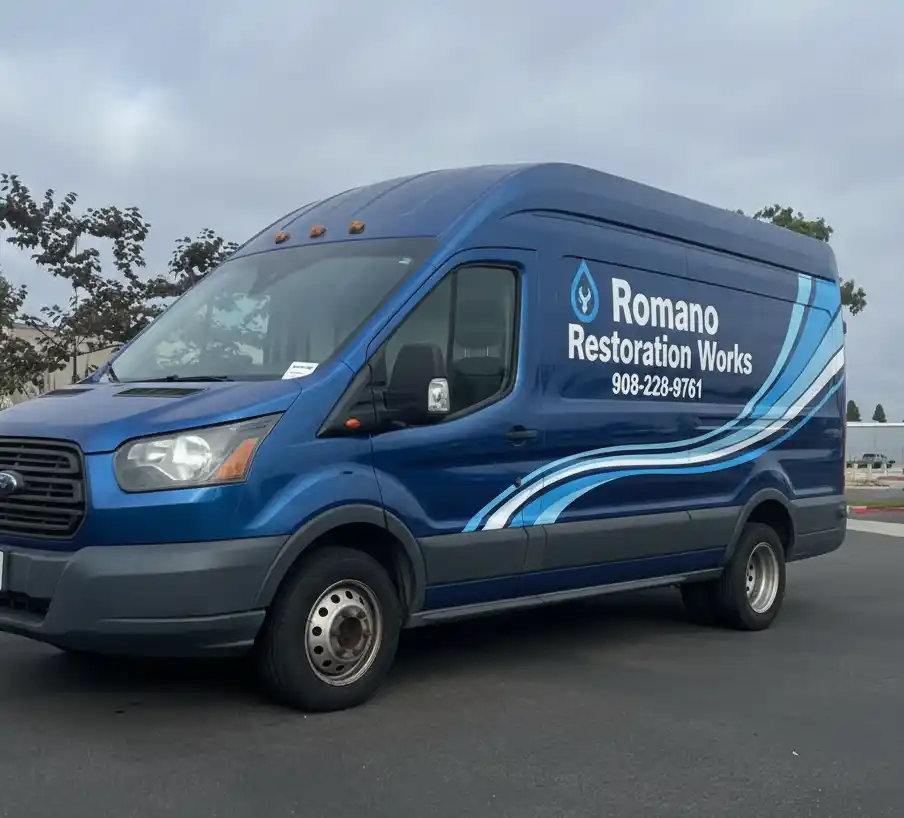
A Rockleigh mold issue is a moisture issue first; treat only the growth and it comes right back behind the fresh drywall. Romano Restoration Works fixes the moisture source first, builds containment so spores stay put, and runs negative-pressure scrubbing throughout removal. In Rockleigh the variety of construction means each remediation is scoped to how that specific assembly traps moisture. We photograph the colonized material before removal and the cleared cavity after, giving a clear before-and-after. Dial 908-228-9761 and we assess the Bergen County remediation on site.
- IICRC S520 protocol
- Negative-air containment
- HEPA filtration
- Source removal to documented line
- Antimicrobial application
- Optional 3rd-party clearance testing
How A Colony Gets Cleared For Good
The IICRC S520 standard defines remediation that actually holds; the shortcut versions all fail within months. Bleach is mostly water — it can lighten surface staining, but the chlorine evaporates while the water feeds the growth underneath, so the mold returns.
We fix the moisture source first, build containment so spores stay put, run negative-pressure air scrubbing, and remove colonized material to a clean margin. We photograph the colonized material before removal and the cleared cavity after, giving a clear before-and-after on the work.
Why The Water Has To Be Found First
Mold rarely shows up without a source — a drip behind tile, a sweating pipe, or a water event that never fully dried. A missing vapor barrier lets ground moisture keep the framing damp enough to colonize season after season.
The source gets fixed in the same scope as the removal, so the homeowner is not back in three months with the same wall. With the cause resolved and the area dried, the wall goes back together over sound, dry material instead of a hidden problem.
One crew for the whole job
A property loss in Rockleigh rarely stays in one lane — mold remediation often overlaps with emergency water mitigation, soot removal, wind damage repair, sewer backup remediation, rebuild and restoration, and our crew handles all of it under one contract. We dispatch the same standard to Mold Remediation in Tenafly, Mold Remediation in Alpine, Cresskill mold remediation, Mold Remediation in Northvale and everywhere else across Bergen County.
If you searched for restoration company near Rockleigh, you have reached a local team — call 908-228-9761 any hour. For background, read Storm Damage in Bergen County: How Nor'easters and Convective Storms Hit Northern NJ Homes Differently on our blog, or head back to our Rockleigh home page to see everything we do.